BMW Drivetrain Malfunction: What the Message Means and What We Check First
A BMW drivetrain malfunction message covers a lot of ground, so here is what it actually means and what we check first in the workshop.
Ikram, Owner and lead technician

The yellow or red "Drivetrain malfunction" message is one of the most common things that brings a BMW to our door, and it is also one of the most misunderstood. The wording sounds dramatic, and the car often behaves oddly at the same time, so people naturally fear the worst. The truth is that this message is a catch-all. It does not point at one specific part. It tells you the engine control unit has seen something it does not like and has reduced power to protect the car.
This post explains what the message is really saying, what we check first when a car arrives at Marine Village, and why guessing at this fault almost always costs more than diagnosing it properly.
What the drivetrain malfunction message actually means
On modern BMWs, the dashboard has moved away from naming specific faults. Instead of "misfire cylinder 3" or "boost pressure low", you get a single friendly phrase so the driver is not alarmed by technical detail. "Drivetrain malfunction" is BMW's way of saying the powertrain has entered a protective state.
Behind that message there is almost always a stored fault code, sometimes several. The car has detected a problem with the engine, the fuelling, the air path, the exhaust side or occasionally the transmission, and it has decided the safest response is to hold back power. That is the limp mode you feel.
Yellow versus red, and what the colour tells you
A yellow drivetrain message usually means the car has logged a fault and reduced power, but it will still drive. A red message is more serious and means the car wants you to stop and have it looked at before driving further.
Either way, the colour tells you about urgency, not about the cause. We have seen yellow messages triggered by a cheap sensor and red messages triggered by the same thing. The only way to know what is actually wrong is to read the codes.
Key takeaway: "Drivetrain malfunction" is a symptom, not a diagnosis. It tells you the car has protected itself, and nothing more. The fault that triggered it still has to be read and tested before anyone spends a penny on parts.
Why you should not drive on it for long
When the car drops into limp mode it is doing it for a reason. Sometimes that reason is trivial, such as a sensor reading briefly out of range. Sometimes it is protecting the engine or turbo from real damage, for example a boost leak that is allowing unmetered air in, or a misfire that is dumping raw fuel into the exhaust.
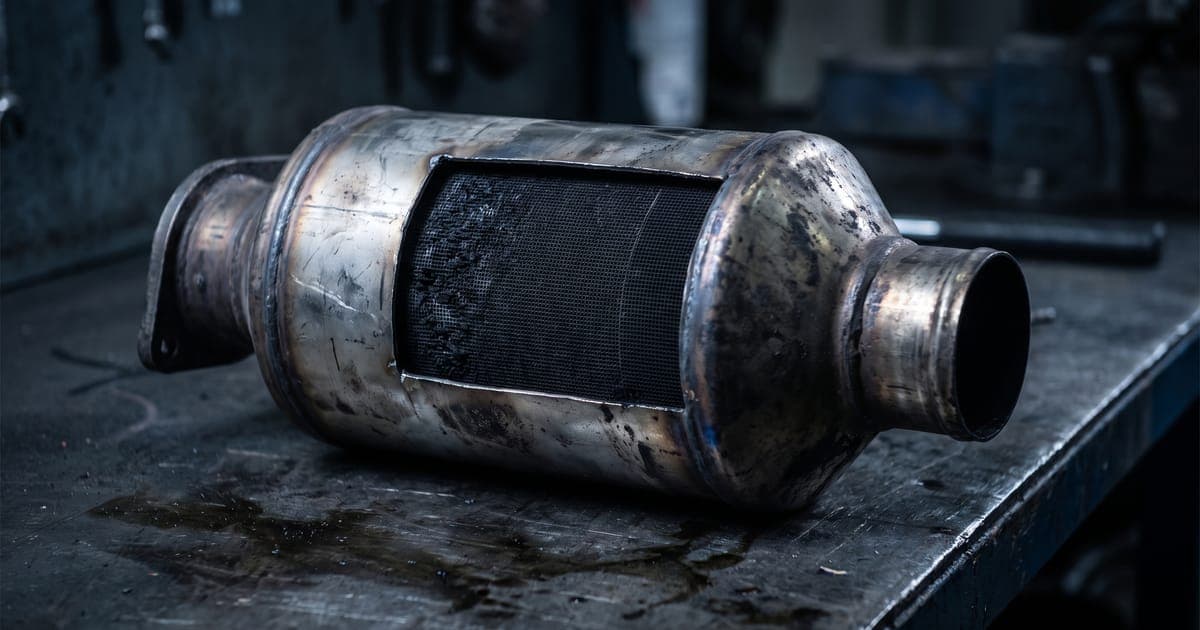
If you keep driving a car that is misfiring, you can overheat and damage the catalytic converter or, on a diesel, overload the particulate filter. So while the message itself is not a reason to panic, it is a reason to get the car seen rather than ignoring it for weeks.
The car is at Marine Village either way, because we do not collect vehicles. Please bring it to us, and if it is in a hard limp mode, drive gently and keep the revs low.
What we check first
This is where experience matters. The drivetrain message points everywhere, so a methodical order saves time and money. Here is roughly how we work through it.
Read the fault memory properly
The first job is always a full fault read across the modules, not just a quick plug-in that clears the dash. A generic code reader will often show nothing useful on a BMW, because the manufacturer-specific codes sit in the DME, the engine control module. We read live data alongside the stored codes so we can see what the car was doing when it logged the fault.
Clearing the code without reading it first is the single most common mistake we see from previous garages. The light goes out, the customer drives away happy, and the fault returns within days because nobody found out why it set in the first place. Our full approach to this lives on our diagnostics page.
Check the air path and boost side
On turbocharged petrol and diesel BMWs, a very large share of drivetrain messages come from the air and boost side. We are looking at the charge pipe, the intercooler hoses, the boost pressure sensor and the wastegate or variable vanes. A split charge pipe or a perished boost hose will set a boost deviation fault and drop the car into limp mode instantly.
These are mechanical faults, and no amount of code clearing will fix them. We pressure test the system so we can see the leak rather than guess at it.
Look at ignition and fuelling
On petrol engines, misfires are a frequent trigger. Worn spark plugs, a failing ignition coil or an injector that has drifted out of range will all log a misfire and prompt the message. Live data shows us misfire counts per cylinder, which tells us exactly where to look rather than replacing a full set of parts in hope.
The N20, N26 and B48 engines in particular are sensitive to plug and coil condition, and we see those regularly.
Check the exhaust and emissions side
On diesels, and increasingly on petrols, the emissions side triggers plenty of these messages. A faulty exhaust gas sensor, a blocked particulate filter or an EGR fault can all put the car into protection. The temptation is to throw a sensor at it because the code names one, but a named sensor is not always the faulty component. We cover why in our piece on NOx sensor faults, and the same logic applies right across the drivetrain.
Rule out the simple stuff
We also check the obvious before chasing anything expensive. A weak or failing battery can cause strange electronic behaviour across the whole car, including drivetrain messages, because the modules do not like low voltage. Loose or corroded earth connections do the same. A quick battery and charging check at the start has saved more than one customer from an unnecessary parts bill.
Common causes we see on BMWs at Marine Village
No two cars are identical, but over the years certain patterns repeat. These are the ones we come across most often.
Charge pipe and boost leaks
On the turbo petrol engines, the plastic charge pipe is a known weak point. It cracks or pops off its connector and the car logs a boost fault the moment you ask for power. This one is extremely common and usually a straightforward fix once confirmed.
Ignition coils and plugs
A single tired coil will cause an intermittent misfire that comes and goes with load and temperature. These are frustrating to chase without live data, because the car may drive perfectly until it is warm or under boost.
High pressure fuel pump and injectors
Some of the direct-injection engines are sensitive to fuel delivery faults. A failing high pressure fuel pump or a leaking injector will set fuelling codes and limp mode. These are more involved and need careful testing, because the symptoms overlap with ignition faults.
Timing chain wear on certain diesels
On the N47 diesel, timing chain wear can show up in a way that eventually affects running and sets faults. We have written about that specific engine in the N47 timing chain explained, and it is worth a read if you own one.
Why guessing costs more than diagnosing
The drivetrain message is the perfect example of why a proper diagnosis pays for itself. Because the message does not name a part, anyone replacing components on a hunch is gambling. We regularly see cars that have already had coils, sensors or even a turbo fitted elsewhere, with the same message still on the dash.
Reading the codes, interpreting the live data and testing the suspect component takes less time and far less money than replacing parts one by one. That is the entire point of diagnostics done properly. We would rather spend an hour finding the real fault than send you home with a new part and the same problem.
What to do if your BMW shows the message
If the message is yellow and the car drives, you can bring it to us without drama, but do not leave it for weeks. If the message is red, drive gently and get it to us as soon as you can, keeping the revs low and the load light.
Try not to keep clearing the message yourself with a cheap reader. Each time you clear it, you lose some of the freeze frame data that helps us see what the car was doing when the fault set. Leaving it stored actually helps the diagnosis.
We have spent years working on these engines, including a long stretch inside main dealer workshops, and the drivetrain message is familiar territory. Bring the car to us at Cardiff Marine Village and we will read it properly, test what the codes point at, and tell you exactly what is going on before any work is agreed.
To book a diagnostic appointment, get in touch or call us on 07496 265651.