The BMW N47 Timing Chain, Explained Without the Scare Stories
An honest look at the BMW N47 timing chain: what actually goes wrong, the warning signs to catch early, and what it means for your diesel.
Ikram, Owner and lead technician

If you own a BMW diesel from the late 2000s or early 2010s, sooner or later someone will mention the N47 timing chain and pull a face. It has become one of those subjects that gets passed around forums and comment sections until the truth is buried under panic. We have worked on a lot of these engines, both inside a main dealer and here at Marine Village, so we want to give you the calm version.
What the N47 is, and where it lives
The N47 is a 2.0 litre four-cylinder diesel that BMW fitted to a huge slice of the range: 118d, 120d, 320d, 520d, X1 and X3 among others, roughly from 2007 onwards. It replaced the older M47 and was a genuinely good engine in most respects. Economical, torquey, and when looked after it will cover very high mileage.
The part that made it famous, and not in a good way, is the timing chain.
Why a chain, and why it matters
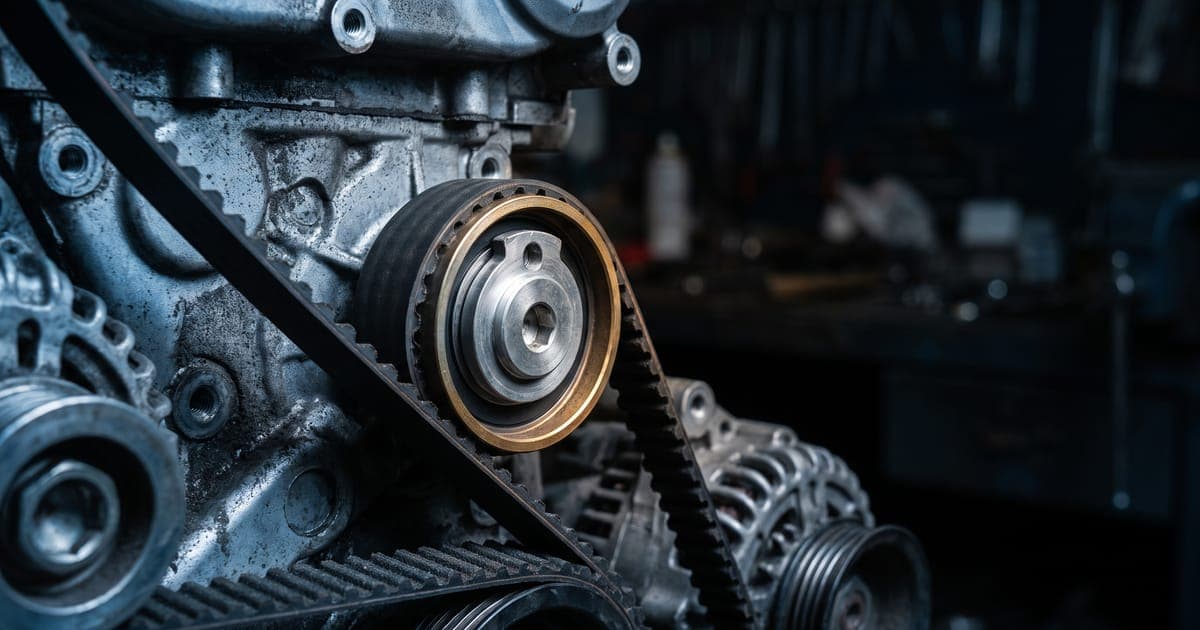
A timing chain keeps the crankshaft and camshafts turning in perfect step so the valves open and close at the right moment. Unlike a rubber timing belt, a chain is designed to last the life of the engine, so there is no scheduled replacement interval. That is the theory, and on many engines it holds true.
The complication with the N47 is not the chain itself so much as where BMW put it. The chain sits at the back of the engine, against the bulkhead, rather than at the front where most timing components live. That single design decision is the reason a job that would be straightforward on another engine becomes a big one here.
What actually goes wrong
Let us separate the real issues from the folklore.
The chain on an N47 can stretch over time. As it wears, it lengthens very slightly, and the tensioner takes up the slack until it runs out of travel. The plastic chain guides can also become brittle and crack. When a guide breaks up, debris ends up in the sump and the chain can start to jump or, in the worst case, let go completely.
If the chain fails while the engine is running, the valves and pistons can meet. That is an interference engine, so a snapped chain is not a roadside inconvenience, it is potentially a new engine. This is the outcome the scare stories are built around, and it is real. What the scare stories leave out is that it very rarely happens without warning.
It is not every car, and it is not random
Earlier N47 engines are more prone to this than later ones. BMW revised the chain and guide design over the production run, so a 2013 car is generally in a better position than a 2008 car. Service history matters enormously too. An engine that has been run on the correct oil, changed on time, and never left low on oil is under far less strain than one that has been neglected.
Short journeys, extended service intervals and skipped oil changes are what turn a durable chain into a worn one. This is a wear item behaving like a wear item, not a lottery.
The warning signs to listen for
This is the part we wish more owners knew, because the N47 almost always tells you it is unhappy before anything dramatic happens.
The cold start rattle
The classic symptom is a rattle or a chattering sound from the back of the engine, worst in the first few seconds after a cold start, then settling as oil pressure builds and the tensioner takes up. Some describe it as a diesel-y clatter, others as a rattle like a handful of stones. If you hear that, do not ignore it and do not turn the radio up.
Fault codes and running changes
A stretched chain shifts the timing relationship between the crankshaft and camshaft. The engine management can pick this up and store correlation fault codes. You might also notice slightly rougher running, a check engine light, or reduced pulling power. On a proper diagnostic session we can read the camshaft to crankshaft offset and see whether the chain has stretched beyond tolerance.
Key takeaway: The N47 chain rarely fails silently. A cold start rattle or a timing correlation fault code is the engine asking for attention, and catching it there is the difference between a planned repair and a ruined engine.
Metal in the oil
When we service one of these, we look at what comes out. Fine metal or plastic fragments in the old oil or on the sump plug magnet is a strong hint that the guides are breaking down. It is one more reason we are not fans of stretching oil changes on these engines.
What we do when an N47 comes in
When someone brings us a BMW diesel with a rattle or a timing fault, we do not jump straight to the worst case. We listen to the engine cold, read the live data and stored codes, and inspect the oil. Diesel engines make a lot of noise anyway, and not every rattle is the chain. Sometimes it is a tensioner, sometimes an injector, sometimes something entirely unrelated. Getting that right first is the whole point of a proper diagnostic assessment.
If the data confirms the chain has stretched or a guide has failed, we will tell you plainly. Replacing the chain, guides, tensioner and the associated seals on an N47 is a significant job because of the rear-mounted layout. In many cases the gearbox has to come away to get proper access. We price it per car once we have seen it and confirmed exactly what needs doing, because the condition of a high-mileage engine varies and we will not quote blind.
Preventive replacement, is it worth it?
This is the question we get most. Should you replace the chain before it fails?
There is no single right answer. On an early engine with high mileage, patchy history and a chain that has never been touched, a planned replacement can be sound money, because it removes the biggest risk hanging over the car and you control the timing rather than the chain. On a later engine with full history and no symptoms, we would generally say monitor it, keep the oil fresh, and act on the first sign rather than tearing into a healthy engine.
We would rather have that honest conversation with you than sell a job nobody needs. If the chain is fine, we will say so.
How to keep an N47 healthy
The single most useful thing you can do is look after the oil.
Oil, and lots of it, on time
Use the correct specification oil, change it more often than the car's long-life schedule suggests, and never run the engine low. The chain, tensioner and guides all depend on clean oil at pressure. A long-life interval that suits a motorway rep doing thirty thousand relaxed miles a year is not the right interval for a car doing short, cold, stop-start trips around Cardiff. We often recommend a shorter, more frequent service pattern for exactly this reason.
If you want to understand what a service actually includes and why the interval matters so much on these engines, our guide on which service your car is actually due is a good place to start.
Drive it properly
Diesels like to be warmed through and used. A run at temperature does the whole engine good, including the DPF and the emissions system. A steady diet of two-mile cold trips is hard on everything.
Act on noises early
We will say it once more because it is the whole message: the rattle is a gift. It is the engine giving you time. Book it in while it is still a chain job and not an engine job.
The honest summary
The N47 is not a bad engine. It is a good engine with one well-known weak point that is heavily influenced by maintenance and by which year the car was built. The horror stories are real but they are the end of a long chain of missed oil changes and ignored rattles, not a bolt from the blue.
If you drive one, know the warning signs, keep the oil clean and fresh, and get any cold start rattle checked before it becomes expensive. That is the whole secret. For a broader picture of what we look after on BMW, see our BMW specialist page.
If you have a BMW diesel and you are hearing something you are not sure about, bring it to us at Cardiff Marine Village and let us have a proper listen. You can reach us through our contact page or call the workshop on 07496 265651. We will give you the calm, honest answer, whatever the chain turns out to be doing.