Interim, Full or Major Service: Which One Your Car Is Actually Due
Full service vs interim explained by a Cardiff German car specialist: what each one covers, how mileage and time decide it, and which your car actually nee
The workshop, Team Mercedes Cardiff
Ask ten drivers what the difference is between an interim and a full service and you will get ten different answers. Some think a service is a service. Others assume the garage decides on the day. In truth there is a fairly clear logic behind which one your car is due, and once you understand it you can stop guessing and stop paying for work you do not need.
We have spent years inside main dealer workshops and now run our own here at Marine Village, and the service tiers cause more confusion than almost anything else. So here is a plain explanation, written from the bench, of what each level actually involves and how to work out which one applies to your car.
What a service actually is
A service is planned maintenance. It is a set of checks, replacements and adjustments carried out at intervals set by time and mileage, whichever comes first. The whole point is to replace consumable parts before they fail and to catch wear while it is still cheap to deal with.
That last phrase matters. A service is not an MOT. The MOT is a legal roadworthiness test with a pass or fail outcome. A service is preventative. The two overlap in places, but a car can sail through an MOT and still be overdue a service, and vice versa.
Modern German cars, especially those with variable or condition-based servicing, complicate the picture further. The dashboard tells you a service is due, but it rarely tells you which service, and it almost never accounts for how the car has actually been used.
The interim service
An interim service is the lighter of the two main tiers. Think of it as a mid-point check to keep the car healthy between the bigger services.
What it typically covers
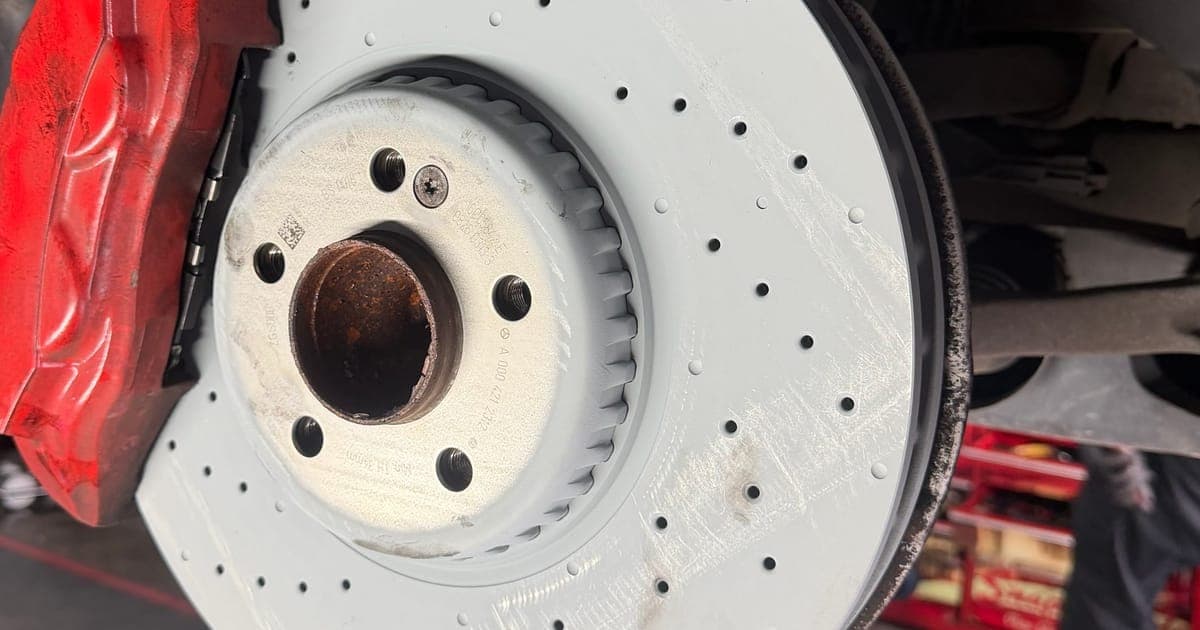
An interim service centres on the engine oil and oil filter, plus a broad safety and condition inspection. We look over brakes, tyres, steering, suspension, lights, wipers, the exhaust and the visible parts of the cooling and fuel systems. We check fluid levels and top up where needed, and we road test the car.
The idea is oil and eyes. Fresh oil is the single most valuable thing you can do for an engine, and a trained set of eyes over the safety-critical parts catches problems early.
Who it suits
Interim servicing suits higher mileage drivers who cover a lot of ground each year and would otherwise go a very long time between full services. If you are doing serious annual mileage, an interim service halfway through the year keeps the oil fresh and gives us a chance to spot a worn brake pad or a perishing tyre before it becomes a problem.
It also suits older cars that we want to keep an eye on more regularly, and cars used hard for short journeys, which is tougher on oil than most people realise.
The full service
The full service is the annual backbone of car maintenance for most drivers. It includes everything in an interim service and then goes further.
What it adds
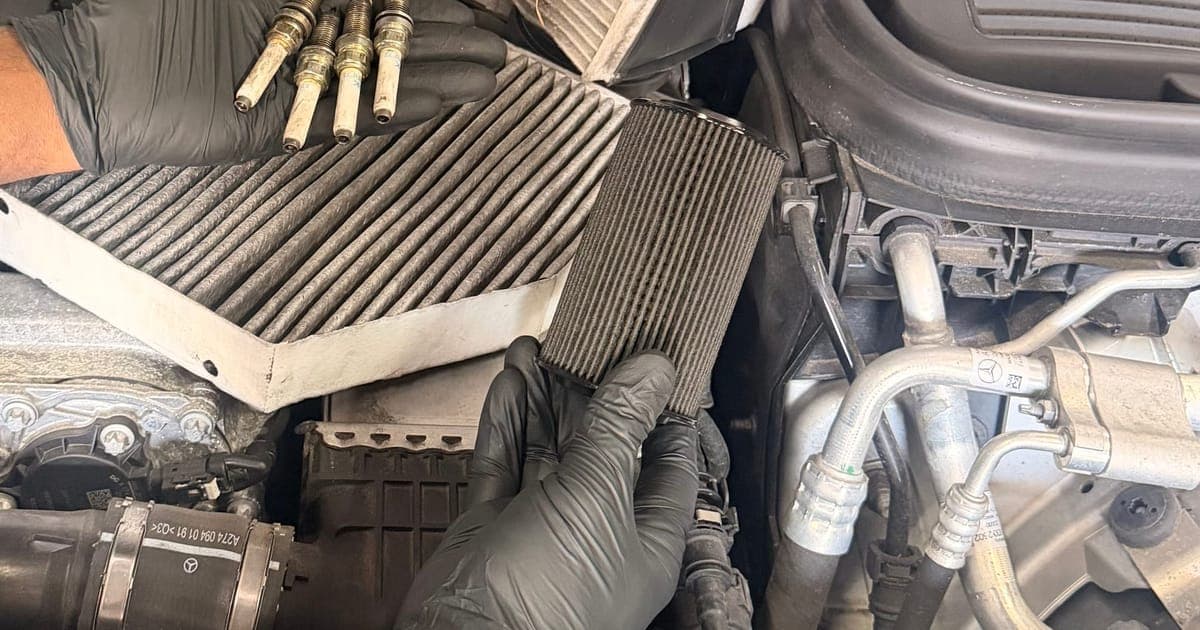
On top of the oil, filter and inspection, a full service typically brings in the air filter, and depending on the vehicle and its schedule, items such as the cabin pollen filter, fuel filter on diesels, and a more thorough look at parts that an interim service only glances at. Spark plugs, brake fluid and other longer-life items come in on their own intervals rather than every full service, which we will come back to.
A full service is a deeper going-over. We spend more time on the car, we check more, and we replace more of the consumables that degrade over a year of use.
Who it suits
For the average driver doing average mileage, one full service a year is the sensible baseline. It aligns neatly with the calendar, it keeps the service history clean, and it gives the car a proper annual health check.
If you can only do one thing a year, this is it.
Key takeaway: Interim and full are not better or worse, they are different intervals. Mileage and time decide which you are due, and a good garage should be able to explain that decision in plain English before any work starts.
The major service
The word major gets used loosely, and this is where a lot of confusion and, frankly, a lot of overcharging creeps in. In honest terms, a major service is a full service that happens to fall in the same year as one or more of the longer-interval jobs.
The long-interval items
Certain parts are designed to last several years or tens of thousands of miles. These include:
- Brake fluid, which absorbs moisture over time and needs periodic replacement
- Spark plugs on petrol engines
- Fuel filters on some diesels
- Coolant on a long cycle
- Transmission fluid on some models
When a couple of these land in the same year as your full service, the combined visit gets labelled a major service. It is not a magic upgrade. It is a full service plus whichever scheduled items are actually due.
The cambelt caveat
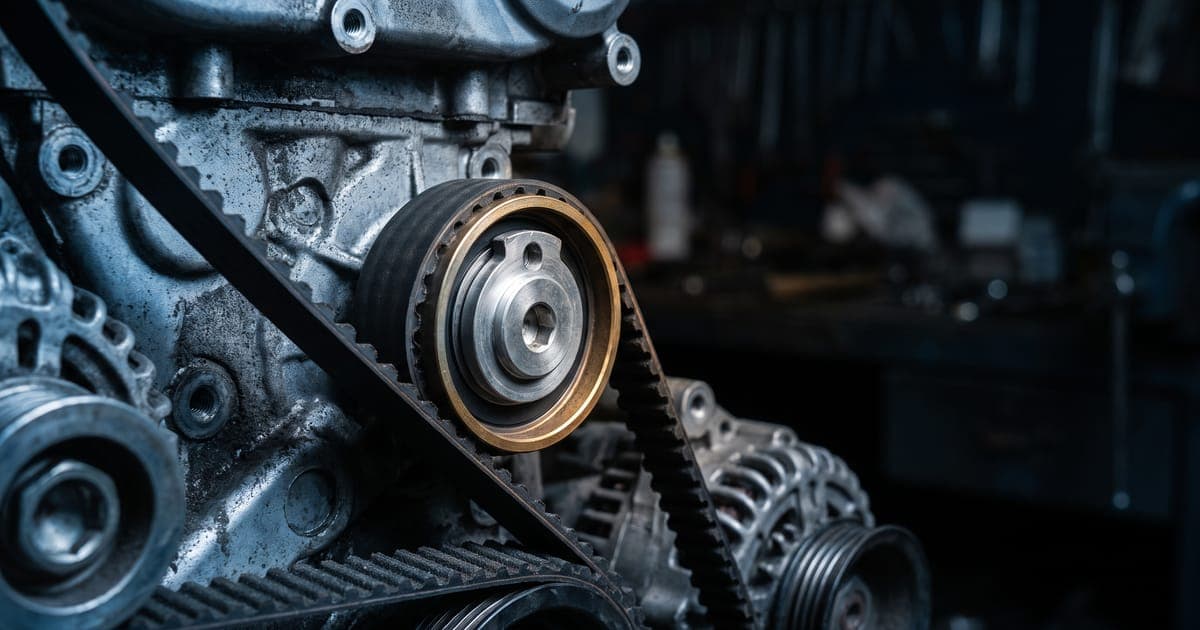
One thing that is emphatically not part of a service, at any tier, is the cambelt. Timing belt replacement runs to its own schedule based on age and mileage, and it is a significant job in its own right. Do not assume a major service covers it. If your car has a belt-driven engine, ask us to check the interval separately. We cover this properly on our cambelt and timing page.
How to work out which one you are due
This is the part most people want, so here is how we actually decide in the workshop.
Start with the schedule, not the dashboard
The service light is a prompt, not a diagnosis. On condition-based systems it estimates wear from how you drive, but it does not know that your brake fluid is three years old or that your spark plugs are on borrowed time. We start with the manufacturer schedule for your exact model, engine and year, then cross-reference the mileage and the dates in the service history.
Look at time as well as miles
Oil degrades whether you drive or not. A car that covers very few miles still needs its oil changed on time, because the oil ages, absorbs moisture and loses its protective additives sitting in the sump. Low mileage does not mean no service. Time-based intervals exist for a reason.
Check what was done last time
Half the job is reading the history. If a full service was done last year at a sensible mileage, an interim this year may be all you need. If the car has been neglected or the history is patchy, we may want to bring some of the longer-interval items forward to get it back on track.
This is exactly the kind of judgement that a schedule alone cannot make, and it is why we would rather look at your actual car and its actual paperwork than quote blind.
Where servicing and the MOT meet
Plenty of drivers book a service and an MOT together, which makes sense. They are separate jobs with separate purposes, but doing them in one visit is convenient and means anything the service flags can be considered alongside the test.
Just remember the distinction. Passing the MOT does not mean the car has been serviced, and a fresh service does not guarantee an MOT pass, because the test checks things a service does not, and the two run to different rules. If you want the detail on how the test itself works, we have written about it in how much an MOT costs in Cardiff and why the test is never where the cost is.
A word on doing too little and too much
There are two ways to get servicing wrong.
Too little is obvious. Skipping services to save money almost always costs more later, because the cheap consumable you did not replace takes an expensive component with it when it fails.
Too much is subtler. Being sold a major service every single year when your mileage and history do not call for it means paying for parts that were not due. A straight garage will tell you when an interim is genuinely enough, even though the full costs more.
We would rather do the right service and keep you coming back than pad out an invoice once. That is not charity, it is how a workshop survives on reputation.
Bringing your car to us
We are an independent German car specialist at Cardiff Marine Village. We are not a main dealer and we are not tied to any manufacturer, which means we can service your car to the correct schedule using quality parts, keep the history stamped and stay honest about what is actually due.
If you are not sure whether your car needs an interim, full or major service, bring it in with the service book or give us the registration and mileage and we will work it out with you. You can see how we approach the different tiers on our car servicing page.
To book, or just to talk through what your car is due, get in touch via our contact page or call us on 07496 265651. We will give you a straight answer before any spanner turns.