Winter Car Check in Cardiff: Five Things Worth Doing Before the First Frost
A winter car check in Cardiff matters more than you think. Here are the five things we check before the first frost, from brakes to coolant strength.
The workshop, Team Mercedes Cardiff
South Wales winters do not arrive quietly. One morning the car starts fine, the next the windscreen is iced solid, the roads around Cardiff Bay are greasy with salt and standing water, and the little things you had been meaning to sort out suddenly matter a great deal.
We see the same pattern every year at Marine Village. The cars that cope with winter are the ones that had a quick, honest look over before the weather turned. Not a full strip-down, just five checks that genuinely change how a car behaves when it is cold, wet and dark.
Here is what we actually check, in the order it is worth doing, and why each one matters more in winter than at any other time of year.
1. Brakes: the first thing to suffer and the last thing you want failing
Brakes do more work in winter and they do it in worse conditions. Wet roads mean longer stopping distances before the brakes even come into it, so the braking system you have needs to be at its best, not merely adequate.
What we look at is pad thickness, disc condition and how the whole system is behaving. Thin pads that would have scraped through another few months in summer are not something to gamble on when you are braking harder and more often on cold, slick roads.
The symptoms worth noticing yourself
A squeal that comes and goes, a grinding noise, a steering wheel that shudders under braking, or a car that pulls to one side when you slow down. Any of those is worth getting looked at before the frost rather than after.
We also check for corrosion on discs. A car that sits a lot over a wet winter will surface-rust its discs quickly, and salt accelerates it. Light surface rust cleans off with normal driving. Pitting and scoring do not.
If you want to understand how we assess the full braking system rather than just swapping pads, our brakes page walks through it.
2. Tyres: tread, pressure and the stuff people forget
Tyres are the single biggest difference between a car that feels planted in winter and one that feels nervous. Everything your brakes and steering do has to go through four contact patches each about the size of your palm.
Tread depth
The legal minimum is 1.6mm, but tread clears water, and winter in South Wales is mostly about water. As tread wears down, the tyre's ability to shift standing water drops off sharply well before it reaches the legal limit. We would far rather talk to you about a worn tyre in November than find it as an advisory on a failed test in January.
Pressure and the cold
Here is the one people miss. Tyre pressure falls as temperature drops. A tyre set correctly on a mild October afternoon can be noticeably soft by the first hard frost, and an underinflated tyre wears unevenly, handles poorly and costs you fuel. Check pressures on a cold morning, not after a long drive.
Age and condition
We also look at the sidewalls for cracking and bulges, and at how evenly the tyre has worn. Uneven wear often points at something else, tracking or a worn suspension component, that is worth catching before winter makes it worse.
There is more detail on what we inspect on our tyres page.
Key takeaway: Brakes and tyres are the two systems that decide whether your car stops and steers safely on a cold, wet South Wales road. Neither improves on its own. A quick look before the first frost is the cheapest insurance you will ever buy.
3. Coolant strength: the check nobody thinks about until it is too late
This is the one that catches people out, and it is the one we feel strongest about going into winter.
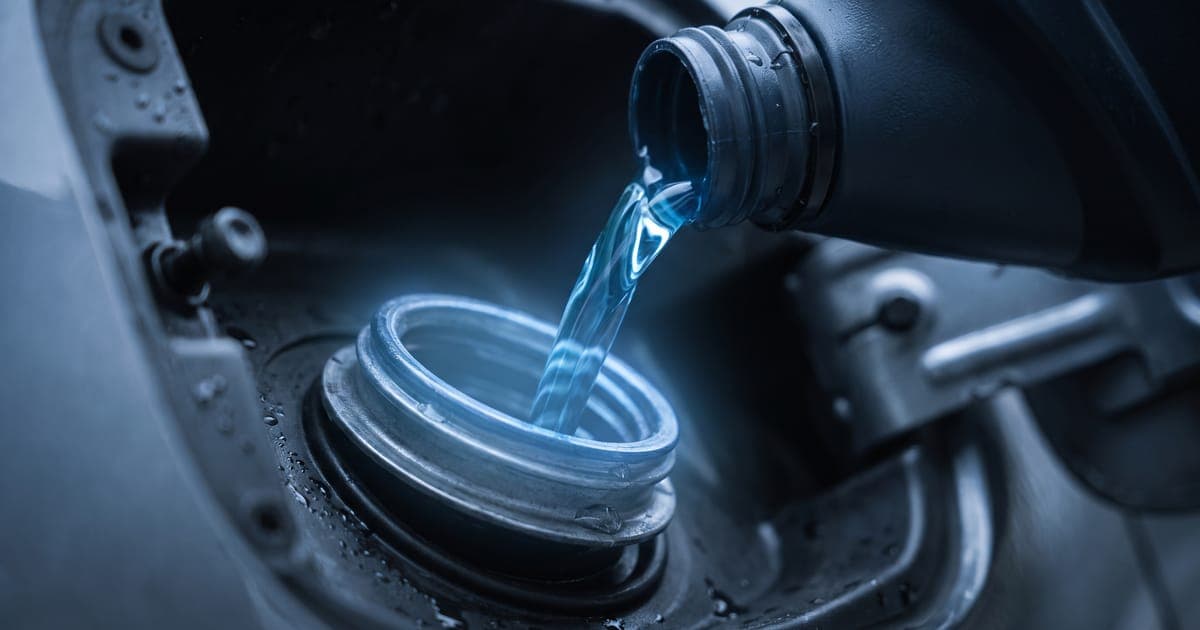
The coolant in your engine is not just there to stop overheating. It also stops the system freezing. The antifreeze concentration in that mix determines how cold it can get before the coolant turns to slush and then ice. Topped up over the years with plain water, or simply old and tired, and that protection quietly fades.
Why it matters so much
When coolant freezes it expands. That expansion can crack a cylinder head, split a radiator or push out a core plug. These are not small repairs. On a German engine they are among the most expensive things that can go wrong, and the whole problem is preventable with a two-minute test.
We check the freezing point of the coolant with a refractometer, not a guess. If the protection has dropped below where it should be, we put it right. We also look at the colour and clarity of the coolant, because a cloudy or discoloured mix can tell us the inhibitors have broken down and corrosion has started inside the system.
This is exactly the kind of thing covered during a proper car service, and it is a good reason not to skip one going into winter.
4. Glass and wipers: you cannot drive what you cannot see
Winter driving in South Wales is mostly done in the dark, in the rain, with a low sun when it does appear and a screen that mists and ices. Visibility is not a comfort issue, it is a safety one.
Wiper blades
Blades perish. The rubber hardens, splits and starts to smear instead of clear. If your wipers chatter across the screen, leave streaks or miss patches, they are done. New blades are a small job that transforms a wet night drive.
The screen itself
We check for chips and cracks. A small chip that sat harmlessly all summer can spread fast in winter, because the glass flexes as it heats up from the demister while the outside stays freezing. Catch a chip early and it is often repairable. Leave it and you are replacing the whole screen.
Washers and demisting
Top up the washer fluid with a proper screenwash mix, not plain water, which will freeze in the bottle and the jets. We also check that the heated elements, rear screen and any heated front screen or mirrors are actually working, because they are easy to forget until the morning you need them.
5. Battery and the cold-start demand
A battery that has been living on borrowed time all summer will usually choose the first cold morning to give up. Cold thickens the oil the engine has to turn over and reduces the battery's own capacity at the same time, so the demand goes up exactly as the supply goes down.
What we check
We test the battery's condition under load, not just its resting voltage, because a battery can read fine sitting still and still collapse the moment it has to crank a cold engine. On modern German cars there is also the charging system and the battery registration side of things to consider, because many of these cars manage charging electronically and a new battery sometimes needs coding to the car.
If your car has felt slow to start, if the lights dim noticeably when you crank it, or if the battery is simply old, it is worth knowing before the frost rather than discovering it in a car park at seven in the morning.
Why winter is different on German cars
Most of the above applies to any car, but there are a few things we see more often on the German marques we work on. Electronic coolant and battery management, sensors that throw up warnings in the cold, and the simple fact that these cars tend to be driven year-round and asked to perform. A fault that a simpler car would shrug off can trigger a dashboard warning and a limp-home mode.
If a warning light does appear, the honest answer is that it needs reading properly rather than guessing. Our diagnostics work exists so we are fixing the actual cause and not throwing parts at a symptom, which is the same principle we wrote about in why the cheap part is rarely the answer.
Getting it all done in one go
The nice thing about these five checks is that they overlap heavily with what we do during routine servicing anyway. Brakes, tyres, coolant, glass and wipers, battery: none of them takes long on their own, and doing them together before the weather turns means you go into winter knowing where you stand.
We do not collect or deliver cars, so these checks happen when you bring the car to us at Cardiff Marine Village. That lets us put it on the ramp, test what needs testing with proper equipment, and give you a straight answer on what is fine, what to keep an eye on and what genuinely needs doing now. Every job is assessed on your actual car, because no two are in the same condition.
Book your winter car check in Cardiff
If you would rather sort these five things before the first frost than after it, get in touch. Head to our contact page or call us on 07496 265651 and we will get your car booked in at Marine Village.