Does a DSG Gearbox Really Need an Oil Change? Yes, and Here Is What Happens If It Does Not
The real DSG service interval, what the oil and filter actually do, and the mechatronic failures we see when the service gets skipped.
Ikram, Owner and lead technician
One of the most common things we hear in the workshop at Marine Village is that a DSG gearbox is "sealed for life" and never needs attention. It is a myth, and it is an expensive one to believe.
The DSG, or direct-shift gearbox, is Volkswagen Group's dual-clutch automatic. You will find it in VWs, Audis, Skodas and SEATs under names like DSG, S tronic and DQ250, DQ200, DQ381 and DL382 depending on the car. Whatever the badge, the principle is the same, and so is the maintenance it quietly demands.
What a DSG actually is, and why oil matters more than you think
A traditional torque-converter automatic uses fluid to transmit drive. A DSG does not. It uses two clutches and a set of gears, controlled by a unit called the mechatronic. One clutch handles the odd gears, the other the even gears, and the box pre-selects the next ratio so the shift is almost instant.
That clever behaviour depends entirely on clean oil at the right level and condition.
On a wet-clutch DSG such as the DQ250, the clutches themselves run in oil. That oil carries clutch material, heat and metal particles. On a dry-clutch DQ200, the clutches are dry but the mechatronic still relies on hydraulic pressure and clean fluid to shift and to hold pressure.
Either way, the oil is doing hard work: lubricating gears, cooling clutches where fitted, and acting as the hydraulic medium that moves the mechatronic's valves.
Why "sealed for life" is misleading
The phrase usually means "sealed for the life the manufacturer cares about", which is the warranty period and perhaps the first owner. It does not mean the fluid lasts as long as the car.
We see DSG boxes well past that point, and the ones that have had their oil and filter changed on schedule behave very differently from the ones that have not.
The DSG service interval, in plain terms
For most wet-clutch DSG boxes, Volkswagen Group specifies an oil and filter change at a set mileage, and then repeating it at regular intervals after that. The common figure for a wet-clutch box is around every 40,000 miles, though it varies by model and model year, so we always confirm against your specific vehicle rather than guessing.
Dry-clutch boxes like the DQ200 use a smaller amount of a different fluid and have their own, often longer, interval. Some variants are listed as not requiring a routine change, but we treat that cautiously, especially on older cars and on vehicles that do a lot of town driving or towing.
Key takeaway: A wet-clutch DSG needs its oil and filter changed on a mileage schedule. "Sealed for life" is a marketing phrase, not an engineering one, and ignoring the service is how an affordable job turns into a gearbox job.
Why driving style changes the interval
Stop-start city driving, short journeys, towing and performance driving all put more heat and more clutch wear into the oil. If your car spends its life crawling around Cardiff rather than cruising the motorway, the oil ages faster than the mileage alone suggests.
If you are not sure which camp your driving falls into, that is exactly the sort of thing we talk through when we look at the car.
What happens when the DSG oil change gets skipped
This is where it stops being theory. These are the patterns we see in the workshop when a DSG has gone too long without fresh oil and a new filter.
Jerky, hesitant or clunky shifts
The first symptoms are usually a hesitation pulling away, a shudder when the clutch engages, or a clunk between gears. Owners often describe it as the car "thinking about it" before moving.
Degraded oil and a clogged filter mean the mechatronic cannot build and hold hydraulic pressure cleanly, so shift quality suffers. Caught early, a correct oil and filter service can restore a lot of that smoothness.
Flaring and slipping
If the clutches are not being held firmly, revs can rise without matching road speed. That is the box slipping, and slipping generates heat, and heat degrades the oil further. It becomes a loop that accelerates wear.
Mechatronic faults
The mechatronic unit is the brain and the hydraulics in one. Contaminated oil carries abrasive particles through its fine valves and solenoids. Over time those passages wear or stick, and the unit starts throwing faults, going into limp mode, or failing to select gears at all.
A mechatronic replacement is one of the biggest bills a DSG owner can face. Many of them trace back to oil that was never changed.
Clutch pack wear on wet-clutch boxes
On a wet-clutch DSG the clutch material lives in the oil. Old oil loaded with that material is less effective at cooling and lubricating, so the clutches wear faster and shift harder. Again, a loop that feeds itself.
Why the filter matters as much as the oil
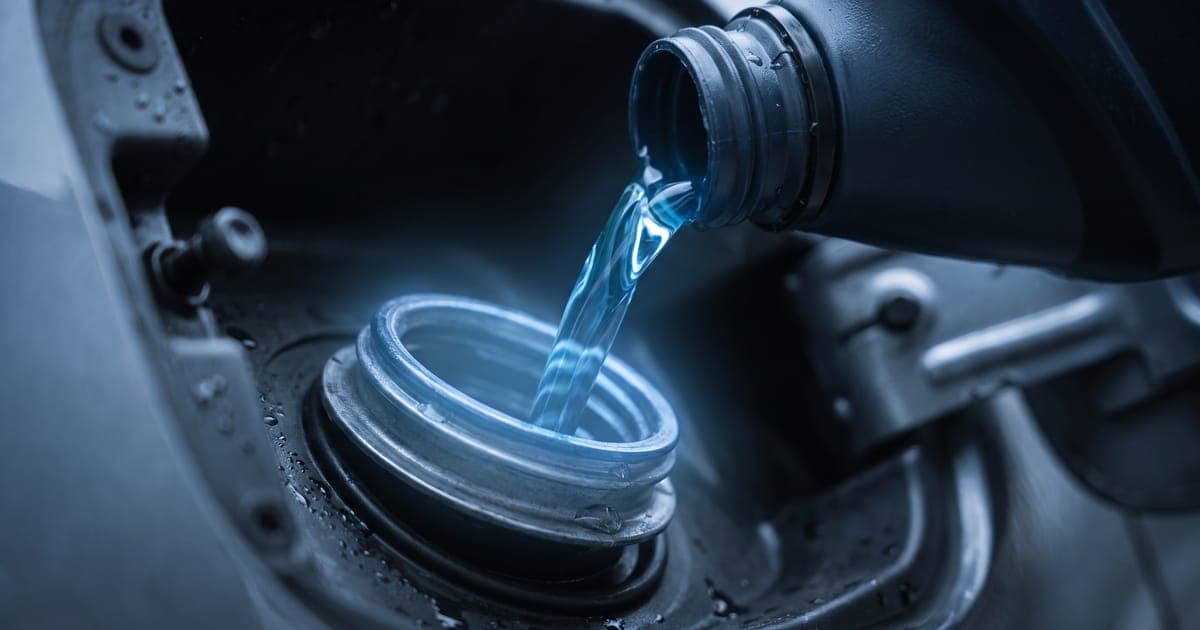
People talk about the DSG "oil change", but on wet-clutch boxes there is a filter too, and it is not optional in our view.
The filter catches the clutch and gear debris suspended in the oil. Change the oil and leave an old, loaded filter in place and you have compromised the job before the car leaves the ramp. We change both together, because doing half the job is close to not doing it.
We also use the correct Volkswagen Group specification fluid in the correct quantity. DSG fluid is specific, the fill level is checked at a set oil temperature, and getting it wrong causes the exact symptoms the service is meant to prevent. If you want our wider view on fluids and parts, we covered the genuine versus aftermarket question in this post on which parts your car actually needs.
How we do a DSG service, and why it is not a quick job
A proper DSG service is more involved than a simple drain and fill, and that is worth understanding when you compare what different places offer.
Reading the box before we touch it
We start on the diagnostic equipment, checking for stored faults and looking at the adaptation values and clutch data where the box reports them. A gearbox already showing wear or fault codes is a different conversation from a healthy box due a routine service.
Draining, replacing and filling correctly
We drain the old oil, replace the filter on boxes that have one, and refill with the correct specification fluid. The fill is then set with the engine running and the oil at the specified temperature. Skip the temperature check and the level will be wrong, and a wrong level is one of the main causes of post-service shift complaints.
Basic adaptations and a road test
After the service we clear and, where appropriate, allow the box to relearn its adaptations, then road test it so we can feel the shifts for ourselves rather than just handing the keys back.
This is routine Volkswagen Group work for us, and it sits alongside the rest of what we do for the marque on our Volkswagen specialist page.
Signs you should book sooner rather than later
Book the car in to us at Marine Village if you notice any of these:
- A shudder or shake when pulling away from a standstill
- Hesitation or a delay before the car engages drive or reverse
- Clunking or harshness between gears that was not there before
- A gearbox warning light, or the car dropping into limp mode
- Revs rising without the speed following
The earlier we see these, the more options you have. A box that only needs fresh oil and a filter is in a very different place from one that has been slipping for months.
The honest view on cost and timing
We do not quote gearbox work blind, because the right answer depends on your exact model, the box fitted, the mileage, the fault codes and the oil's condition when we drain it. Every DSG service is priced per vehicle after we have seen it.
What we can tell you plainly is that a routine oil and filter service is a far smaller job than a mechatronic unit or a clutch pack, and it is the single best thing you can do to keep the box out of that territory.
If you want to think about where a DSG service sits within your car's overall maintenance, our guide to which service your car is actually due puts it in context.
Book your DSG service with us
We are an independent German car specialist at Cardiff Marine Village. Between us we spent years inside main dealer workshops before setting up here, and DSG and S tronic work is bread and butter for us.
If your VW, Audi, Skoda or SEAT is approaching its interval, or you have felt any of the symptoms above, bring it to us and we will check it properly. Please note we do not collect or deliver vehicles, so the car comes to us at Marine Village.
Get in touch through our contact page or call us on 07496 265651 and we will get you booked in.