Cambelt Intervals: How to Find Yours, and What Happens If You Miss It
How to find your cambelt interval, what happens if you miss it, and why cambelt replacement near me is a job to book on time, not after a fault.
The workshop, Team Mercedes Cardiff
If you drive a German car with a belt-driven engine, the cambelt is the single service item most likely to catch people out. It does its job silently for years, gives no warning, and then one day it does not. By the time there is a noise, the damage is usually done.
This is one of the few jobs where the maths is simple. Replacing the belt on schedule is routine work. Missing it can turn into a rebuilt or replacement engine. We see both outcomes in the workshop, and the difference almost always comes down to whether someone found the interval in time.
What a cambelt actually does
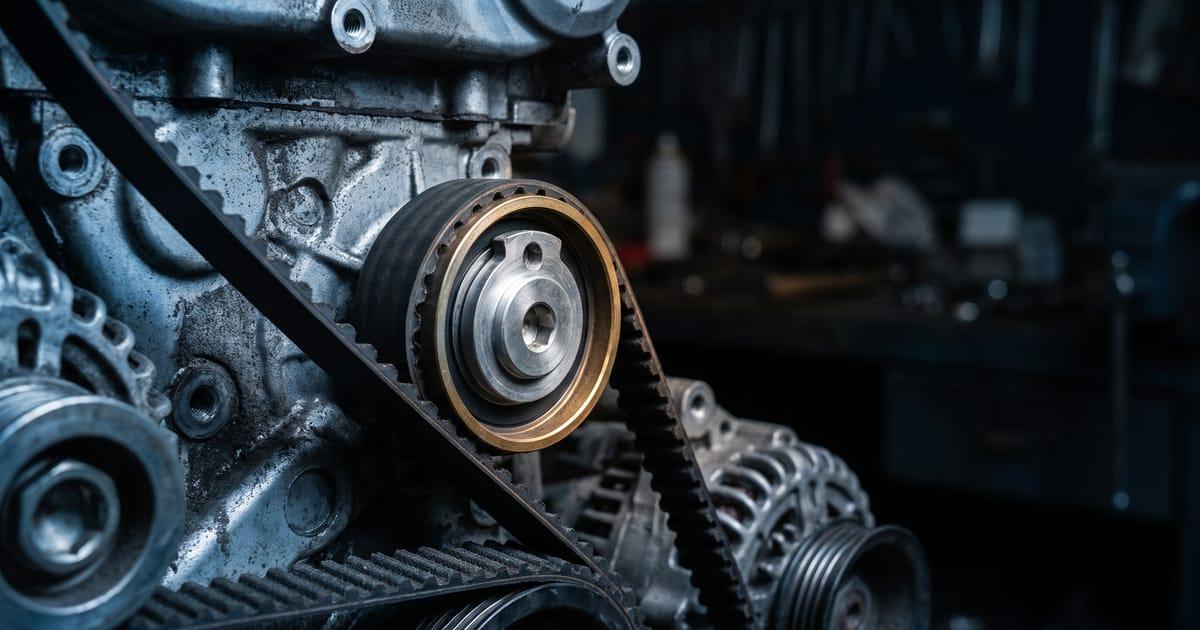
The cambelt, or timing belt, keeps the top of your engine in step with the bottom. The crankshaft turns the pistons, the camshaft opens and closes the valves, and the belt makes sure those two movements stay perfectly timed. A few teeth of slip and the timing is gone.
Not every car has a belt. Plenty of Mercedes and BMW engines use a timing chain, which is designed to last the life of the engine (though chains have their own failure patterns, which is a separate story). Many Volkswagen, Audi, SEAT and Skoda engines, and some Mercedes diesels, use a belt that is a scheduled replacement item.
Belt or chain: how to tell
The honest answer is that you cannot always tell by looking, and guessing is risky. The engine code matters more than the badge. Two cars of the same model and year can have different engines, one belt and one chain. We identify it from the VIN and the engine code rather than assuming.
Key takeaway: The cambelt gives no warning before it fails. If your engine is belt-driven, the interval is a date and mileage to act on, not a symptom to wait for.
Why an interference engine makes this urgent
Most modern engines are what is called an interference design. That means the valves and pistons share the same space, just not at the same moment. The timing belt is what keeps them from meeting.
If the belt snaps or jumps, the valves stay open when a piston rises. The piston hits the valves. At that point you are looking at bent valves at best, and damaged pistons, cylinder head and more in the worst cases. The engine stops instantly, often at speed, which is its own hazard.
This is why the cost of replacing a belt on time is never the real figure to think about. The figure that matters is what an engine rebuild costs when the belt is left too long. One is planned maintenance. The other is a bill nobody budgets for.
How to find your cambelt interval
There is no single universal number, which is where a lot of confusion starts. Intervals are set by the manufacturer per engine, and they are revised over the years. A figure you read in a forum for your model might be for a different engine, a different market, or an older guidance.
Check the right sources in the right order
Start with the owner's handbook or the service schedule for your exact engine. If you have the service book or digital service history, the last belt change (if any) should be recorded. Then confirm against the manufacturer's current schedule, because some intervals were shortened after the car was built.
Almost every cambelt interval has two triggers: a mileage figure and a time figure, whichever comes first. The time trigger catches people out constantly. A belt is a rubber-based part. It ages and hardens whether the car is driven or not, so a low-mileage car that is ten years old can be well overdue even though the mileage looks fine.
The water pump question
On a great many engines the water pump is driven by the cambelt, or sits behind the same covers. When we have the belt off, the pump is right there. Replacing it at the same time is usually the sensible call, because the labour to reach it is already done. A pump that fails later can take the fresh belt with it. We assess this per vehicle and tell you what we find.
"But I have no service history, how do I know if it was done?"
This is common on used cars, and it is exactly the situation where guessing costs the most. If there is no documented proof the belt was changed, we treat it as if it was not. The downside of changing a belt that turns out to have life left is small. The downside of assuming a belt is fine when it is not is an engine.
When a car comes to us at Marine Village, we can inspect what is visible, read the engine code, and advise honestly on where you stand. On many engines the belt condition cannot be properly judged without removing covers, so a recommendation based on history and age is often the responsible one.
This ties into the wider question of keeping proper records. An independent cambelt change, documented correctly, counts as service history in the same way a dealer job does. If you are worried about the paperwork side of servicing, our piece on whether an independent service voids your warranty covers how that works.
Signs you should never rely on
People sometimes ask what a failing cambelt sounds like. The uncomfortable truth is that a healthy belt and a belt one mile from failing can look and sound identical from the driver's seat.
There are a few things worth noticing, but none of them are a safety net:
A light rattle or chirp on cold start
This can point to a worn tensioner or idler pulley rather than the belt itself, but those components are part of the same kit and the same job. It is a reason to get it looked at, not a reliable warning.
Visible cracking or a shiny, glazed belt
If a belt is ever exposed during other work and shows cracks, fraying or a glazed surface, it is past its best. But you cannot inspect most belts without stripping covers, so this is not something you can check on a driveway.
The point is simple: do not wait for a symptom. By the time there is one, you are gambling. The schedule exists precisely because the part does not warn you.
What a cambelt replacement involves
It is a proper job, not a quick swap. Access usually means removing engine covers, ancillary belts, sometimes an engine mount, and working to tight timing marks. The new belt, tensioner, idlers and often the water pump go on as a kit, and the timing has to be set exactly.
Get the timing wrong by a tooth and the engine runs badly or not at all, so this is work that rewards doing carefully and correctly the first time. We use quality parts matched to the engine, and we set and check the timing properly before the car goes back together. You can read more about how we choose parts across this kind of work on our cambelt and timing page.
We do this work on Volkswagen, Audi, SEAT, Skoda and the belt-driven Mercedes engines regularly, so the specific traps on each engine are familiar rather than a surprise.
When to book it
The best time to book a cambelt is before you reach either trigger, not after. If you are approaching the mileage figure, or the time figure, or you have bought a car with no proof it was ever done, that is the moment to sort it.
If you are searching for cambelt replacement near me because a service reminder has popped up or an interval is approaching, bring the car to us at Cardiff Marine Village. We will confirm the correct interval for your exact engine from the VIN, check what records exist, and give you a clear, honest recommendation and a price for your vehicle once we have seen it. No pressure, no padding, just the right call for the engine in front of us.
The bottom line
A cambelt is cheap insurance against an expensive failure. The interval is not a suggestion, and the time limit matters as much as the mileage. If your engine uses a belt and you are not certain it has been changed on schedule, treat that as the next thing to deal with, not something to leave until the car tells you. The car will not tell you in time.
To check your interval or book a cambelt replacement, get in touch or call us on 07496 265651. Bring the car to us at Marine Village and we will confirm exactly where your engine stands.