Your AdBlue Countdown Will Not Reset: What Causes It and What Actually Fixes It
If your AdBlue countdown won't reset after a top-up, here is what causes it and what actually fixes it, explained by our Cardiff German car specialists.
Ikram, Owner and lead technician
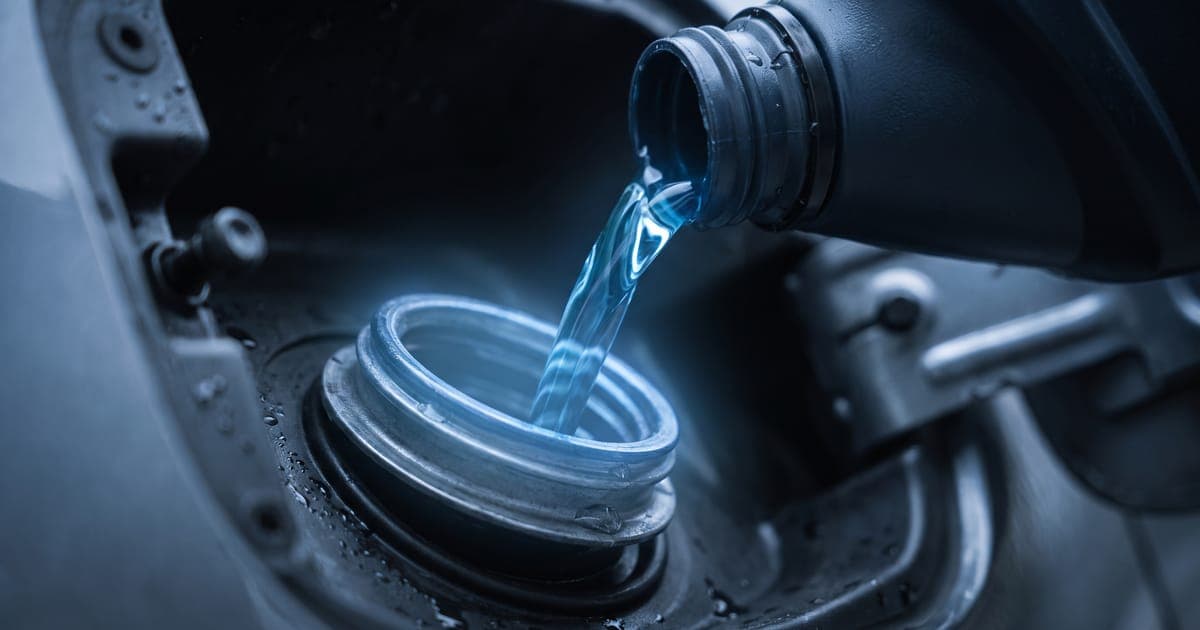
You topped the AdBlue tank right to the neck, closed the filler, and the dashboard still tells you the car will not restart in a set number of miles or starts. The countdown has not moved. It is one of the more alarming warnings a modern diesel can throw at you, because it comes with a hard deadline attached. Once that number reaches zero, the engine will not crank.
The good news is that a countdown refusing to reset almost never means the car has run out of AdBlue. It usually means the system no longer trusts its own readings, and until it trusts them again, it will not clear the warning. Here is what is actually going on and how we work through it in the workshop.
What the AdBlue countdown is really telling you
AdBlue, also called DEF, is a urea solution injected into the exhaust to turn harmful nitrogen oxides into harmless nitrogen and water. The system that manages this is called SCR, or selective catalytic reduction. It is monitored closely because it is an emissions control device, and the law requires the car to force the issue if it stops working correctly.
That is why the warning behaves differently from a normal service light. When the car decides the emissions system is not doing its job, it starts a countdown. First you get mileage warnings, then start-number warnings, then a refusal to start. This is a deliberate legal design, not a fault in itself.
The key point is that the countdown is triggered by a stored fault, not by the fuel gauge style level reading alone. Adding fluid clears a genuine low-level warning. It does nothing for a countdown that was started by a sensor or dosing fault.
Key takeaway: An AdBlue countdown that will not reset after a top-up is almost always a stored emissions fault, not an empty tank. The fault has to be found and cleared, not drowned in fluid.
Why topping up does not clear it
We see this most weeks. Someone gets the warning, panics, buys two containers of AdBlue, fills the tank, and the dashboard carries on counting down. They assume the fluid was faulty or that they did not add enough.
What has actually happened is that the car logged a specific reason for the warning, stored it in the SCR control unit, and will only reset once that reason has been resolved and the system has run a successful self-check. If the underlying fault is still present, there is nothing to reset to.
Some systems will clear a pure level warning on their own after a short drive once enough fluid is detected. A countdown that has already locked in a restart limit is a different animal. That one needs the stored fault read, the cause fixed, and the countdown cleared with the correct software routine.
The faults we find most often
When a car comes to us at Marine Village with a stuck AdBlue countdown, we start with a proper fault code read across the relevant control units, not just a generic plug-in reader. The common causes group into a handful of areas.
NOx sensors
There are usually two NOx sensors, one before and one after the SCR catalyst. They measure how much nitrogen oxide is in the exhaust so the car knows whether the dosing is working. These sensors sit in a brutal environment of heat and vibration, and they fail. When one reads out of range or stops talking altogether, the car cannot confirm the system is working, so it starts the countdown.
A failed NOx sensor is one of the single most common triggers we see. No amount of AdBlue fixes a sensor that has died.
The dosing module and injector
AdBlue is metered into the exhaust by a dosing valve or injector. These can clog with crystallised urea, especially if the car does a lot of short runs where the exhaust never gets properly hot. A blocked or weak injector means not enough fluid reaches the catalyst, the downstream NOx reading stays high, and the fault logs.
The AdBlue pump and lines
The pump that pressurises the system can fail, and the feed lines can crystallise or develop leaks. In cold Welsh winters we also see fluid that has frozen and expanded, cracking a line or damaging the pump. Any loss of pressure stops proper dosing.
Level and quality sensors
The tank has a sensor that reads both level and, on many cars, fluid quality. If someone has topped up with the wrong fluid, screenwash, or water, the quality reading goes out of spec and the system refuses to carry on. A faulty sensor can also report an empty tank when it is full, which is maddening but entirely fixable.
Software and the self-check routine
Sometimes the hardware is fine and the car simply needs its control unit updated or the self-test driven out correctly. The SCR system runs its checks under specific conditions of temperature, speed and load. If those conditions are never met, the car never confirms the fix and the countdown lingers.
Why guessing is expensive on these systems
AdBlue faults are the classic case where throwing parts at the problem costs more than diagnosing it. The components are not cheap, and more than one of them can produce an almost identical warning. Replace a NOx sensor when the real problem is a blocked injector and you have spent money and still have the countdown.
This is where proper equipment matters. We read live data from the SCR module, check the actual dosing quantity against what the car is commanding, look at both NOx sensor outputs, and verify system pressure. That tells us whether the fluid is being delivered and whether the sensors agree with reality. Only then do we commit to a repair. You can read more about how we approach this on our diagnostics page.
It is the same discipline we apply to every emissions fault. Finding the real cause first is always cheaper than replacing parts in hope.
What the fix actually looks like
Once we have identified the cause, the repair is usually straightforward. A failed NOx sensor gets replaced with the correct part and coded if the car requires it. A clogged injector is cleaned or replaced. A pump or line fault is repaired and the system refilled and bled.
The step people forget is the last one. After the physical repair, the stored fault has to be cleared and the car has to pass its own SCR check before the countdown resets. On some vehicles that means a specific drive cycle, on others it needs an active reset through the diagnostic software. Skip this and the warning can hang around even though the hardware is sound.
A word on AdBlue delete and emulators
We get asked about so-called AdBlue delete or emulator boxes that trick the car into ignoring the system. We do not fit them. Disabling an emissions control device is an MOT failure under the current emissions rules, it is illegal to drive on the road, and it defeats the purpose of the system entirely. If your car has one fitted by a previous owner, that is worth knowing before test time.
How to avoid the countdown in the first place
A few habits genuinely help. Buy AdBlue from a reputable source and keep it sealed, because the fluid degrades once exposed to air. Never top up with anything other than proper DEF, and never let anyone pour it into the wrong filler. In winter, keep the tank reasonably full so there is less room for freezing fluid to cause damage.
Most importantly, act on the early level warnings rather than ignoring them until a countdown appears. Topping up at the gentle reminder stage is simple. Waiting until the car has logged a hard fault and started counting starts is a workshop visit.
If your car does a lot of short, cold journeys, it is also worth the occasional longer run at motorway speed. That lets the exhaust reach the temperature the system needs to dose cleanly and run its checks, which keeps injectors clearer and sensors happier. The same short-trip pattern causes trouble elsewhere too, which is why we often see AdBlue and particulate issues on the same cars, a connection we cover in our piece on why your DPF keeps blocking.
Bring it in before it hits zero
If your AdBlue countdown has started and will not reset, do not wait for the number to reach the point where the car refuses to start. It is far easier to work on, and far less disruptive to you, while the car is still running normally. Once it locks you out, it becomes a non-starting vehicle that you still have to get to us.
We will read the system properly, tell you exactly what is wrong, and give you a clear price for your specific car once we have seen it. Every job is quoted after diagnosis, never before.
To book your car in at Cardiff Marine Village, get in touch or call us on 07496 265651. Bring the car to us and we will get the countdown sorted properly.